What Does Mold Smell Like?
Why Mold Odors Matter More Than You Think
If you’ve ever walked into a room and caught an earthy, damp, or strangely sweet smell, your nose may be alerting you to something important: MOLD.
And here’s the surprising part — your nose often finds mold long before your eyes ever will.
In this article, we break down why mold smells the way it does, which smells to pay attention to, and how homeowners can use scent as an early warning sign for hidden mold.
Why Mold Has a Smell in the First Place
When mold grows, it releases tiny gases called MVOCs (microbial volatile organic compounds). These are not spores. These are chemical gases produced only when mold is alive and actively growing.
MVOCs can move through walls, floors, insulation, and vents, which means you can smell mold even when it’s completely hidden from view.
So if you’re wondering, “What does mold smell like?” the answer depends on the type of MVOCs present — and each smell can tell you something different.
The Three Mold Smells Every Homeowner Should Know
1-Octen-3-ol:
The Classic “Mushroom Smell”
- If a room smells like mushrooms, soil, or a damp forest floor, this gas may be to blame.
- What it smells like: Earthy, mushroomy, damp dirt.
- Why it matters: Humans can detect even tiny amounts of 1-octen-3-ol — far earlier than mold becomes visible.
- Researchers frequently find this chemical in homes with mold behind drywall, schools with damp insulation, and offices with hidden leaks. It’s often the first sign that mold is growing where you can’t see it.
2-Heptanone:
The Fruity, Banana-Like Odor
- If something smells oddly fruity — like overripe bananas — it may not be last week’s groceries.
- What it smells like: Fruity, banana-like, occasionally similar to nail polish remover.
- Where it shows up: Created by common indoor molds like Aspergillus and Penicillium, especially in damp carpets, subfloors, and wall cavities. This odor often spreads before visible mold appears.
3-Methylfuran:
The Sweet, Caramel-Like Smell
- This one surprises people — mold can smell sweet.
- What it smells like: Caramel, nuts, or a warm, slightly sweet odor.
- Why it’s important: 3-methylfuran is released early in the mold growth cycle. Your nose may pick this up even when lab tests don’t yet show high spore counts.
Why Mold Odors Are an Early Warning System
MVOCs are incredibly helpful because they are:
- Produced only when mold is actively growing
- Detectable at very low levels
- Able to travel through building materials
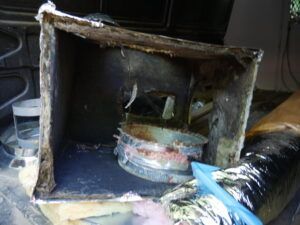
If you smell mold, something is happening now, not something left over from the past. Mold odors often indicate hidden moisture problems in walls, crawl spaces, basements, HVAC systems, or under flooring.
Your nose may detect danger before your eyes — or your budget — do.
What To Do If Your Home Smells Like Mold
If you notice earthy, fruity, or sweet odors that don’t match anything familiar in your home, consider it a signal to:
- Check for moisture or leaks
- Look in closets, behind furniture, and near exterior walls
- Monitor humidity levels (40–60% is ideal)
- Consider air sampling or MVOC-based assessments
- Use tools like AirGuard to detect environmental changes early
The sooner you catch mold, the easier — and more affordable — it is to handle.
Why AirGuard Cares About Mold Smell
At AirGuard, we believe homeowners deserve early detection, not expensive surprises. Mold odors are one of the earliest indicators that something’s wrong, and understanding them empowers you to act before mold spreads.
Want to learn more about how environmental monitoring helps prevent mold growth? Or need help identifying unusual smells in your home?
We’re here to help you breathe easier — literally.